
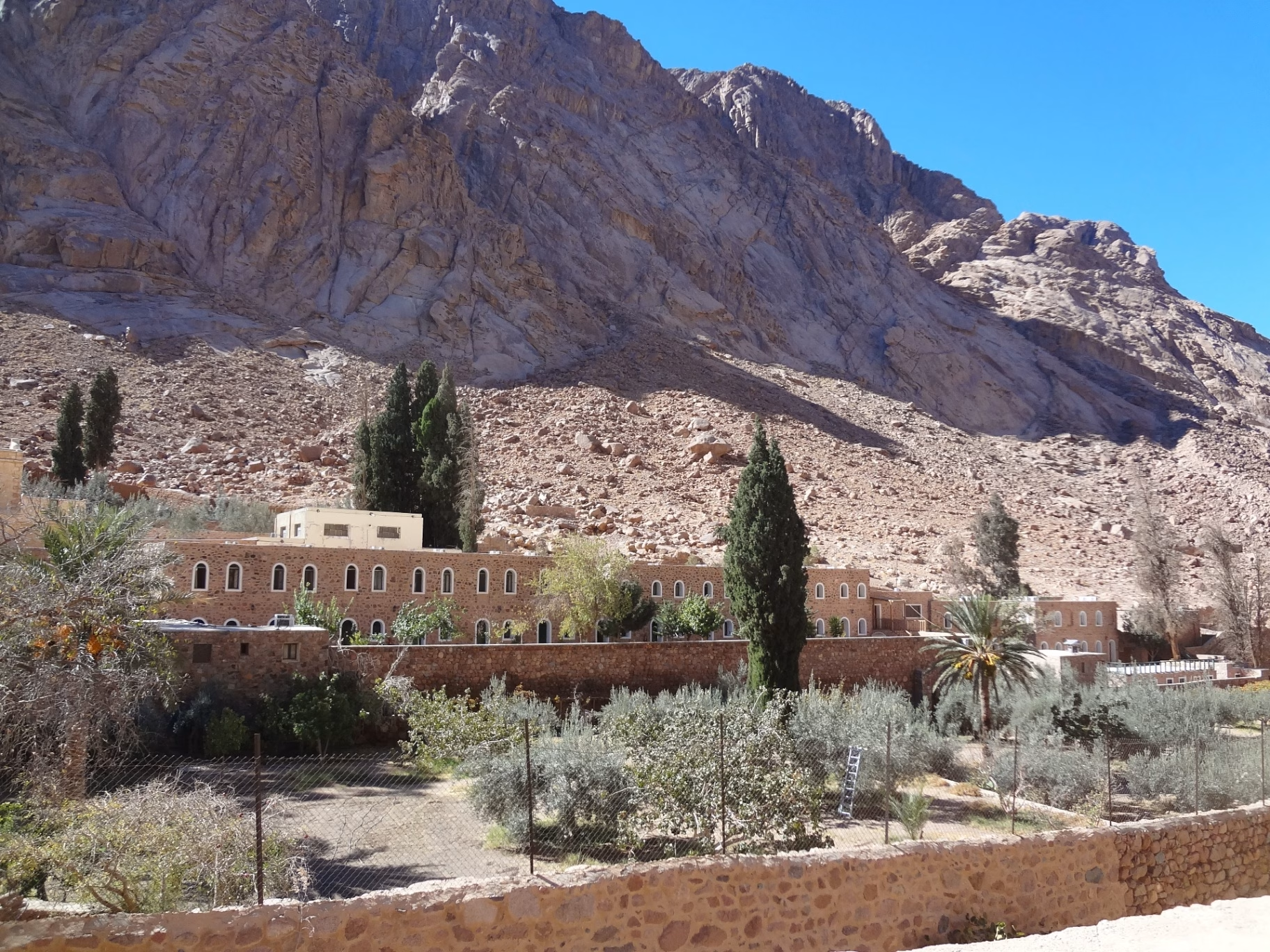
Saint Catherine’s Monastery – A Sacred Place and Its Bedouin Guardians
In the valley beneath Mount Sinai, the stone walls of Saint Catherine’s Monastery rise like a fortress against the desert. For nearly fifteen centuries, monks have prayed here, copied manuscripts, and guarded relics. But the story of this monastery is not only written in Greek, Latin, and Arabic manuscripts. It also lives in the oral traditions of the Bedouin tribe, the Jebeliya, who have served as its guardians, workers, and storytellers across generations.
A Monastery Rooted in History
Commissioned by Emperor Justinian I in the 6th century, the monastery was built to protect the holy site of the Burning Bush, where Moses is said to have received God’s call. Inside its walls lie treasures of Christianity: the Church of the Transfiguration, the Chapel of the Burning Bush, and a library that holds ancient manuscripts, including fragments of the Codex Sinaiticus.
But alongside this written history, another one has always been told orally—by the Bedouins who lived and labored around it.
What to See Inside – With Bedouin Eyes
When walking through the monastery, the stones and relics come alive when seen through Bedouin stories:
- The Church of the Transfiguration glitters with mosaics and chandeliers. Local guides say its light reflects not just gold, but “the prayers of every soul who entered here.”
- The Chapel of the Burning Bush, where a thorn bush still grows, is described by Bedouins as “the bush that speaks without words.”
- The Monastery Walls, massive and ancient, are remembered in stories as “the shield of both monk and Bedouin,” protecting not just a faith, but the shared life of the valley.
Why It Matters
Saint Catherine’s Monastery is not just an ancient building of stone and icons. It is a living relationship between monks and Bedouins, faith and desert, prayer and survival. The manuscripts in the library tell one story, but the Bedouin firesides tell another—of storms that saved the monastery, of bushes that still burn with meaning, and of a people who see themselves as guardians of a world treasure.
To visit is to step into both worlds at once: the silent halls of the monastery and the spoken memory of the desert people who keep its story alive.